
Start Strong This Spring Semester
Ready or not, spring semester is beginning and college students are heading back to campus. For some, this means starting over at a new college after transferring. For others, it means returning to the same campus with hopes for a better academic and social experience. In both situations, students and their families are thinking about what it will take to start the spring semester strong.
Let me say this clearly. There is nothing wrong with transferring from one college to another. Students transfer for many reasons, including location, academic interest, financial fit, or a fall semester that did not go as planned. For many students, transferring offers motivation and momentum rather than setback.
College success rests on two interconnected pillars: social connection and academic engagement. Students who feel a sense of belonging on campus are more likely to persist and perform well academically (1). With that in mind, it makes sense to focus first on helping students find their people.
Fall semesters are often filled with first-year social programming. Spring semesters tend to be quieter. Transfer students should attend any transfer orientation or social events offered by the institution. Whether a transfer or returning student, there are many ways for students to connect to campus and make new friends.
Finding Connection on Campus
Most campuses have a Student Engagement or Student Involvement office. I encourage students to stop by in person and speak with a staff member about clubs, organizations, or activities that align with their interests. Students can also find this information by searching “student clubs” on the campus website.
There’s no need to join everything. Choose one organization and commit to attending meetings or events throughout the spring semester. Consistency builds familiarity, and familiarity leads to connection.
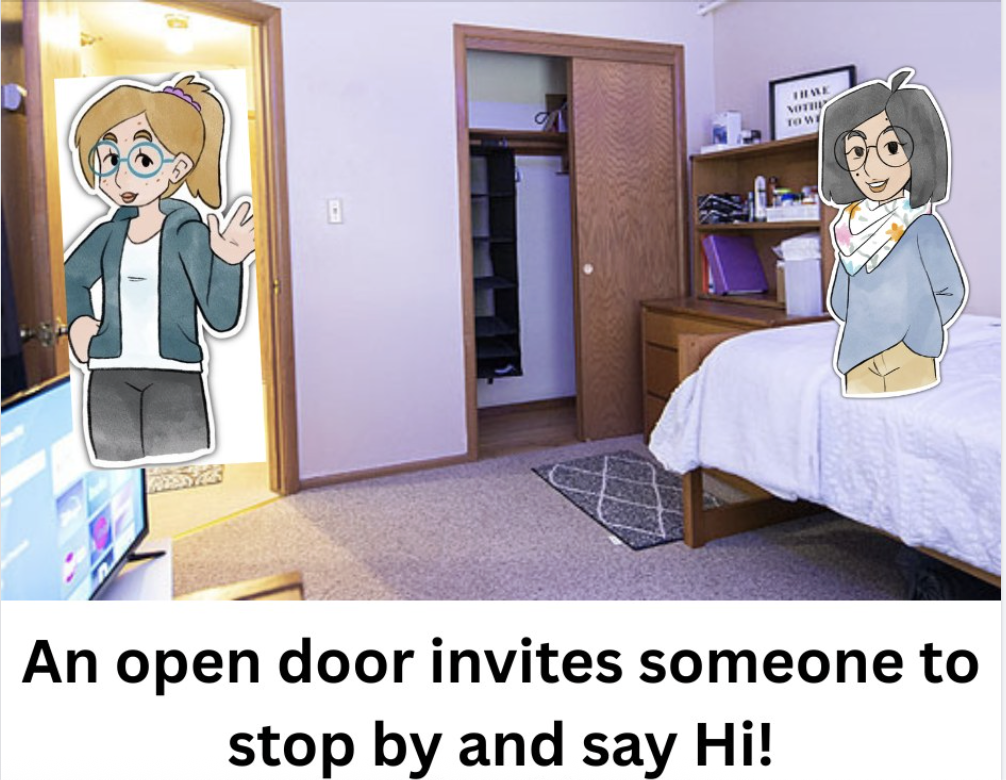
I also believe deeply in the power of an open door. An open door says, “Stop by.” It signals openness and willingness to connect. The first two weeks of the spring semester are especially important for building or renewing a social circle, and that often starts with something as simple as leaving the door open.
Connecting Academically, Early
Social connection matters, but academic connection is just as important.
Some students return in the spring feeling disappointed with their fall academic performance. The structure of college coursework differs significantly from high school. My colleague, Dr. Jennifer Clark (2), often explains that high school students complete roughly 80 percent of coursework during class time, while college students are expected to do the majority of their learning outside the classroom. This shift catches many students by surprise. Seeking academic support early in the semester is a smart and proactive strategy.
I encourage students to review their spring schedule and identify any course that may be challenging. Classes like Calculus, Anatomy and Physiology, and Introductory Chemistry are well known for their rigor. Searching “academic support” or “tutoring” on the campus website will surface available resources.

I also recommend physically locating key spaces like the Writing Center and Math Lab during the first weeks of the semester. Take a few minutes to introduce yourself to the staff and ask how students typically use these services. Knowing where to go before stress sets in makes a real difference.
Scheduling Resource Use
Awareness alone is not enough. Scheduling time to use support is what matters.
For example, if a syllabus notes a three-page essay due in Week 4, plan time in Week 3 to draft an outline and thesis. Bringing that draft to the Writing Center for feedback early allows students to receive feedback before stress sets in and revisions seem overwhelming. Early support is far more effective than last-minute rescue.
Many students are unaware of the resources designed to support their success. A 2023 report found that just over half of surveyed students knew tutoring or academic support existed on their campus, and less than one-third were aware of student success advisors.
Games that respond to real need
Developing awareness of campus resources is one of the reasons “Campus” cards sit at the center of the Success Prints Crash Course board game and video game. Students practice navigating real college scenarios while learning when and how to access the support around them.
Over the next several weeks, I’ll be highlighting campus resources featured in the Success Prints Crash Course games across our social platforms (LinkedIn, Facebook, Instagram, and Pinterest). I invite you to follow along, ask questions, and join the conversation.
Spring semester is not about perfection. It’s about awareness, connection, and intentional choices made early. A strong start is built one decision at a time.
References:
Terrell Strayhorn’s book, College Students’ Sense of Belonging: A Key to Educational Success for All Students, (2018, Routledge) is a great resource.
Dr. Jennifer Clark is Assistant Dean in the Norm Asbjornson College of Engineering at Montana State University.